
always harvest late, a bit like Laurent Ponsot. He is always among the last to harvest. We are often ten days later than the others.
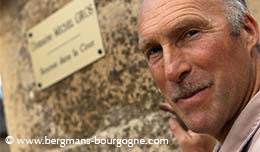
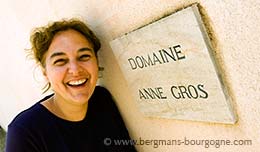
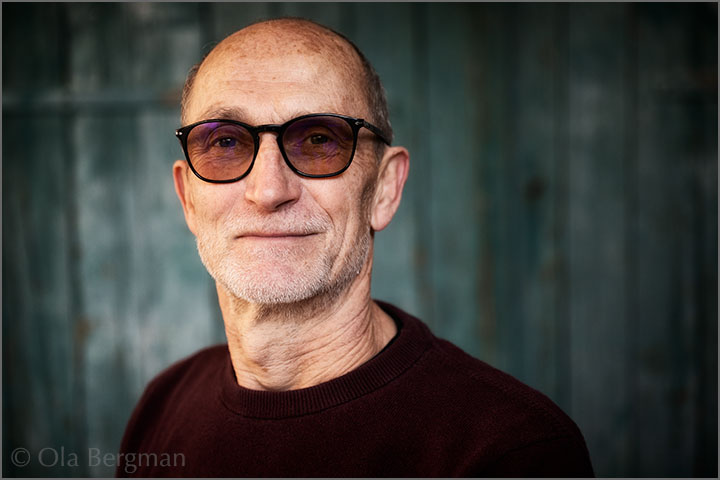
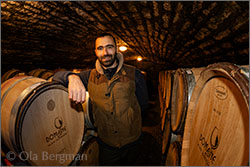
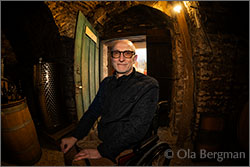
Alain Jeanniard is in his cellars in Morey-Saint-Denis. Domaine Alain Jeanniard is tucked away on a back street at the top of the village. As this is the Côte de Nuits most of the wines are red.
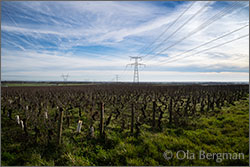
– Good maturity is something I like, he continues. We have a lot of old vines and they produce grapes that retain higher acidity, and I believe that’s why you need good maturity. With young vines you often lose the acidity. When you have very ripe grapes you don’t need to do much work in the cellar. There is three weeks of maceration and we do very little of pumping over and punching down.
 There has been winegrowers in the Jeanniard family for a long time, at least from the 18th or 19th century. But today’s domaine is a fairly recent creation. Alain Jeanniard’s father died in 1978, only 45 years old, something which put an abrupt stop to everything. At the time Alain was 14 years old.
– My father hadn’t managed to develop the domaine by then, says Alain Jeanniard. Back in 1978 you could still buy vineyards at a decent price. Now it’s no longer possible. It’s very expensive. When the domaine came to a stop my mother told me to find another profession. I ended up working at Siemens with alarm systems.
– I was happy with that for quite some time. Then around 2000 things started to change. I saw my friends David Duband and Thierry Beaumont being happy doing their thing, making wine. I felt I needed to make a complete change. So I signed up for wine school, got a bac viticole in Beaune. There wasn’t many vineyards left in the family. My mother had sold the vineyards. There was half a hectare of Coteaux Bourguignons, which was Bourgogne Grand Ordinaire at the time, a bit of Morey-Saint-Denis Vieilles Vignes and very little Morey-Saint-Denis premier cru Les Chenevery left from my grandfather. Around the same time I was lucky to be appointed by Roland Masse, the manager of the Domaine des Hospices de Beaune, to take care of their Clos de la Roche and their Mazis-Chambertin vineyards.
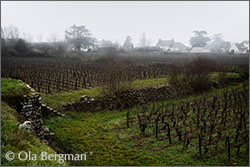 While tending to the grand cru vineyards the Domaine des Hospices de Beaune Alain Jeanniard set up his own domaine. In addition to the small plots of family vineyards he bought one up in the Hautes-Côtes.
– Hautes-Côtes is not very expensive, he says. It’s about 50 000 euros per hectare. I created a GFA, Groupement Foncier Agricole, and found some investors. Thanks to them I could continue buying vineyards.
– There has been winegrowers in the family for a long time. But the family has never been rich. In order to be rich in Burgundy you have to have premier and grand crus. My grandfather and my father mainly had Bourgogne Passetoutgrains and Aligoté, with a little bit of Gevrey-Chambertin and Morey-Saint-Denis in addition to that. But no premier or grand crus. When my grandfather bought this house there was an orchard behind it. He didn’t buy it, because he didn’t have enough money. That orchard is now part of Clos de la Roche. And Clos de la Roche sells for 30 to 50 millions per hectare.
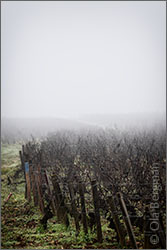 – My grandfather worked for the SNCF (France's state-owned railway operator). Grapes wasn’t the only crop There was blackcurrants and other crops as well. As was the case for many people at the time polyculture was necessary in order to make a living. My father was both a nurseryman and a winegrower. In fact, there is even a plot in Clos de Tart called Jeanniard. The vines my father gave to Clos de Tart, it seems, were of good quality. They were all sélection massale. At the time there were no clones.
More vineyards were added to the domaine in 2001, 2003, 2004, 2006 and 2010. Two vineyards in Gevrey-Chambertin, one in Fixin, one in Chambolle-Musigny, one in Morey-Saint-Denis, one in Nuits-Saint-Georges and one premier cru in Pommard. By 2010 Domaine Alain Jeanniard had 4.5 hectares of vineyards.
– I am also renting vineyards from Laurent Ponsot, since he is not interested in Bourgogne and Coteaux Bourguignons, says Alain Jeanniard. In 2018 my brother-in-law in Corgoloin retired, so we bought his domaine. Thanks to to him we got Côte de Nuits-Villages in red and white, Ladoix and Bourgogne. We have seven hectares now, from which we produce 16 wines.
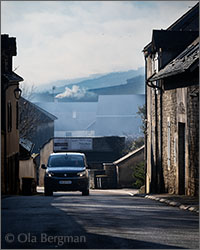 Of those 16 wines only two are white – one Côte de Nuits-Villages and one Bourgogne Hautes-Côtes de Nuits.
– The Côte de Nuits-Villages is in Corgoloin. We are on a small slope above the cemetery. Very sandy, I’d say it resembles Monts Luisants. The soil contains lots of small yellow stones. It is very suitable for whites. It is a wine with notes of white fruits, peaches and quince. The Hautes-Côtes de Nuits has more acidity, because it is cooler in the Hautes-Côtes. The Côte de Nuits-Villages is all about roundness, while the Hautes-Côtes is tighter, with more of exotic fruits, like lychee and pineapple. The Hautes-Côtes vines are about 30-40 years old. In Corgoloin we have two plots, one with young vines and with old. The average age is 45 years.
Towards the end of 2002 Alain Jeanniard suffered a slipped disc while working in Mazis-Chambertin and he had to undergo surgery in Mâcon. Unfortunately the operation wasn’t successful and he almost died.
– Somehow I managed to recover, he says. I continued working for the Domaine des Hospices de Beaune until 2007, when it was no longer physically possible for me. Initially I used one walking stick, then two and eventually ended up in a wheelchair, which meant I could no longer work in the vineyards.
 This meant new routines were needed for the domaine. Alain Jeanniard brought in his brother who had been working with Thierry Brouin at Clos des Lambrays for 31 years. His sister also got involved. His nephew Sebastien arrived in 2011 and Alexis Thévenin joined the team in 2016.
– Since 2019 we have reduced the time for vinification. Before that it used to be five-six weeks of maceration. One week pre-fermentation, 2-3 weeks slow fermentation in concrete tanks, then one week of lower temperature. Especially warm vintages, with ripe grapes, there is no point in vinifying longer because everything is easily extracted in a week or two. Five weeks will give too much esters. We do it in three weeks now. There is very little pigeage, and when we do it we do it with our feet. Because when you mechanically with whole bunches there is a risk you damage the stems and get a vegetal taste.
 There are three red regional appellation wines at Domaine Alain Jeanniard. There is the Coteaux Bourguignons which comes from vineyards mainly in Morey-Saint-Denis, but also in Chambolle-Musigny (occasionally there is also a rosé version of this). The Bourgogne Côte d’Or comes from Corgoloin. And there is a high-end regional, the Bourgogne Quintessence Pinot Noir. It’s a blend of Hautes-Côtes de Nuits from Chevannes and a plot in Chambolle-Musigny. For the first two wines no whole bunches are used. For the Quintessence cuvée it is 50 per cent.
When it comes to the old vines cuvée of village appellation Morey-Saint-Denis Alexis Thévenin says it has become the signature wine of Domaine Alain Jeanniard. It’s a blend of three plots. All are below the village and of respectable age. One of the plots is closing in on 100 years.
– For me it’s a favourite because it’s the vineyards from my father and my grandfather, says Alain Jeanniard. Every vintage is good, even 2004 was good. The three plots make up 50 ares together. The one in Chenevery was planted by my grandfather in 1929. My father planted Les Cognées and Clos Solon in the 1960-1970s. Even if Chenevery is coming close to 100 years we still have years when the yield is 40 hl/ha. Clos Solomon is very close to Chenevery. Les Cognées is in the same area, but further down, on the other side of the route nationale. All are within 300-400 metres from each other. All are very typical Morey-Saint-Denis. They bring out the silky side of the village.
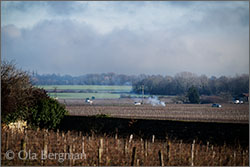 Domaine Alain Jeanniard has quite a lot of old vines. The Fixin, En Combe Roy, is a plot of 36 ares planted at least 70-80 years ago.
– It’s a well-placed vineyard, says Alain Jeanniard. It’s right below below the premier crus, Les Hervelets and Les Arvelets. Fixin is a village which has benefitted from global warming. Same thing with Marsannay. Côtes de Nuits-Villages in Corgoloin is hard in cooler years. warmer years much better. For the Fixin we use 50 per cent whole bunches and usually 50 per cent new oak. It is quite mineral, a bit foursquare in a positive way. There is 30-50 centimetres of soil, very much clay, almost yellow.
The Nuits-Saint-Georges, Les Poisets, is no youngster either. These are 90-year-old vines just below the Nuits-Saint-Georges premier cru Les Cailles.
The Ladoix, Champ Pussuet, is right where the Côte de Nuits meets the Côte de Beaune. It’s a small plot, just 15 ares, of 50-year-old vines.
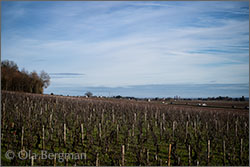 – We are really at the end of the appellation, says Alexis Thévenin. North of Buisson, just 300 metres from Domaine d’Ardhuy (which is in Corgoloin) and 500-600 metres as the crow flies from our Côte de Nuits-Villages. It’s a wine which is always open. Easy to drink. A good start for discovering Burgundy. Morey-Saint-Denis is more of a mystery. While the Côte de Nuits Villages has its ups and downs depending on the vintage, the Ladoix, like the Morey-Saint-Denis Vieilles Vignes, is consistent. The Gevrey-Chambertin is temperamental, but the Ladoix is always good.
The two premier crus of the domaine are in a sense opposites. One in the Côte de Beaune, one in the Côte de Nuits. One has recently been uprooted and replanted, one is almost century-old.
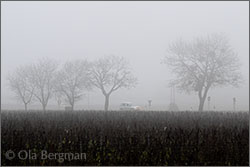 – The Morey Saint Denis premier cru Les Chenevery is also from vines planted by my grandfather in 1929, says Alain Jeanniard, but it is the top part of Les Chenevery, which is premier cru. There is very little difference from the village appellation Les Chenevery that you find in the old vines cuvée. We use a bit more new oak for the premier cru.
In 2004 Alain Jeanniard acquired the Pommard premier cru Les Saussilles. It is right on the border to Beaune, with Clos des Mouches on the other side. The quality was there, but the yield was never enough to make it profitable.
– So we uprooted it in 2016, says Alain Jeanniard. It was then replanted 2020, with the first vintage in 2022. The aromas completely different from the other wines. Floral, almost a bit vegetal. Very complex. It’s a Pommard with finesse and elegance. Once the roots go deeper it will be more interesting.
– Apart from the amount of whole bunches it is basically the same process for all the reds, says Alexis Thévenin. We use whole bunches in order to have a more aromatic complexity. Winemaking here is not very technical. It is mainly about observation and tasting, and then taking the necessary steps if needed. We don’t compensate for the vintage. Not more extraction in a cool year, or vice versa. We love having different vintages and different terroirs.
Since 2003 Alain Jeanniard has been running a négociant business parallell to the domaine. The labels just say Alain Jeanniard, with no mention of domaine. But with the rising prices in Burgundy it has become increasingly difficult to buy grapes.
– I bought more before, says Alain Jeanniard. Today the négoce is maybe five per cent of what we do. One barrel of Gevrey-Chambertin is now 9000 euros, not including tax. That’s 300 bottles and 30 euros per bottle. I sell my for 36 euros TTC (including all taxes). So it is not possible. I need to sell them for 70 euros if I buy grapes for the négoce.
© 2026 Ola Bergman